Key Characteristics & Appeal
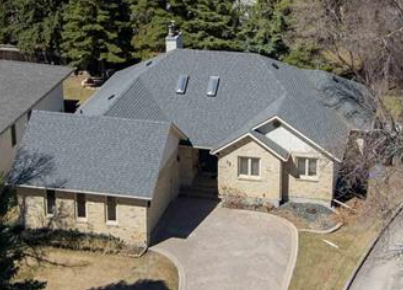
This is a 960-square-foot home built in 1944 on a 3,003-square-foot lot, located at 777 Alfred Avenue in Winnipeg’s William Whyte neighbourhood. Its standout feature is the assessed value: at $178,000, it’s noticeably above the street and neighbourhood averages ($164,100 and $149,100 respectively), ranking in the top 35% on its street and top 27% in the area. This suggests a property that has been maintained or updated relative to its immediate neighbours, or that sits on a more desirable block.
The living area is on the smaller side—around average for the street, but below the citywide norm of 1,342 square feet. The land is similarly modest: typical for the area, but far below Winnipeg’s average lot size of 6,570 square feet. The house is also older than the citywide median (1966), though it’s newer than many homes on its own street and in the neighbourhood, where average build years hover around 1927–1929.
Where the appeal lies: The value is in the relative affordability and the assessed-value-to-size ratio. For someone looking at Winnipeg’s housing market, this property offers a below-citywide price point ($178k assessed vs. $390k city average) while sitting in a pocket where values are actually a bit stronger than the surrounding area. That could point to a block that’s holding its own or seeing modest reinvestment. The smaller footprint also means lower upkeep costs, both in terms of square footage and lot maintenance.
Who it would suit: First-time buyers priced out of larger, newer homes. Investors or flippers focused on entry-level infill or rental properties in established neighbourhoods. Anyone who prioritizes walkability and urban proximity over a big yard or modern build. Less obvious: it may also appeal to someone downsizing from a larger suburban home who still wants a standalone house (not a condo) with a small, manageable yard. The assessed value data suggests it’s not an obvious tear-down candidate—unlike some neighbouring properties—so it may have better bones or recent work than the numbers alone show.
Frequently Asked Questions
1. Is this a good deal compared to other homes in Winnipeg?
The assessed value of $178,000 is well below the citywide average of $390,100, but that’s common for older, smaller homes in central neighbourhoods. The more telling comparison is the street and neighbourhood data: it’s above-average on both, which means you’re buying into a relatively stronger pocket of the area. Whether it’s a “deal” depends on how much renovation it needs and how the market’s actually pricing similar sales, not just assessments.
2. Why is the assessed value higher than the neighbourhood average if the living area is smaller?
Assessed value reflects more than square footage. Factors like lot condition, recent upgrades, roof age, electrical, plumbing, layout, and the specific block’s sale history all play a role. The property’s value ranking (top 27% in the neighbourhood) suggests it has some combination of better condition, a more desirable location on the street, or recent improvements that neighbours haven’t done.
3. How does the small lot affect resale or redevelopment potential?
At 3,003 square feet, the lot is typical for the street and neighbourhood, but 89% of citywide properties have more land. That limits future subdivision or major expansion. However, for someone who doesn’t want a large yard to maintain, or who wants to keep a low-cost property, a smaller lot is a practical advantage. It also means lower property taxes relative to larger suburban lots.
4. Should I be concerned about the home being from 1944?
Not automatically. Many homes of that vintage have solid framing, plaster walls, and established foundations. The risk is in deferred maintenance: knob-and-tube wiring, old plumbing, asbestos in insulation or flooring, lead paint. The year-built data shows this house is newer than most on its street (top 28%) and in the neighbourhood (top 21%), which could mean it was built during a post-war building boom with better materials than the 1920s stock. Still, a thorough inspection is essential—condition matters far more than age alone.
5. What does the “rank by ___, larger/newer/higher = better rank” note actually mean?
It’s how the ranking system works. For living area and land area, a higher rank means the property is bigger than more of its peers. For year built, a higher rank means it’s newer. For assessed value, a higher rank means it’s worth more. So a rank of 165 out of 476 on the street for assessed value means only 164 properties on Alfred Avenue have a higher assessed value—it’s in the top 35%. The fill bar shows roughly how many peers you’re beating. It’s not a score of quality, just a comparison of raw numbers.