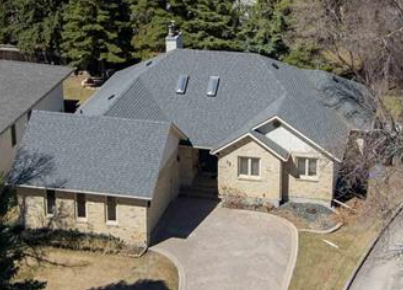
476 Manitoba Avenue

William Whyte, Winnipeg

57.7

Fair

Overall 57.7

Newer than most nearby homes

1,080 sqft (bottom 49%)

Built in 2003 (76 yrs newer than avg)

Located in a average-income area

with median household income of ~58k

Transit 74.0

2-min walk to transit with 2 nearby routes

Within 500m: 2 dining spots, 3 schools, 1 healthcare facility, and 4 shops nearby

Living Area

Near average

7% smaller than neighborhood avg.

Year Built

Above average

76 yrs newer than neighborhood avg.

Mother tongue

English · 67%Tagalog · 17%

Past 10 years William Whyte sales snapshot (~80% of all data)

Sold Count

703

Median price

117k

$/sqft

$87/sqft

Avg build year

1927

Need help understanding this property?

Buying a home is more than a transaction. Our Winnipeg real estate agents provide market insights, pricing analysis, and neighbourhood expertise to help you decide with confidence.

Usually replies in a few minutes

Property score

57.7 is composed by the two sections below.

Property Score

58.4Fair
Living Area1,080 sqft52Fair
Year Built200387Excellent
Lot Size3,547 sqft46Low
Neighbourhood Sales Activity59Fair

Community Score

56.6Fair
Household Income62Fair
Education Level44Low
Housing Stress63Fair
Core Housing Need63Fair
Employment Health42Low

Neighbourhood Sales

William Whyte

How to read: Share of sales in each ~$50k price band for “william whyte” (Detached houses (non-condo), 2024). The tallest band is the mainstream budget range; multi-year view shows how that band shifts over time.

Market Conditions · WinnipegSeller's Market
Buyer'sBalancedSeller's

Sales-to-New-Listings

64.6%

1,196

sold

1,852

new listings

Manitoba Real Estate Association March public data on New Listings and Properties Sold across Manitoba

Sold Above Asking

65%

Majority sold above asking

68 of 104 sold above asking · Manually compiled from MLS Winnipeg sold listings, May 4 – May 10, 2026

With a Sales-to-New-Listings ratio of 64.6% and 65% of homes selling above asking price, demand is clearly outpacing supply. Buyers are competing, which is putting upward pressure on prices.

Area census snapshot

Dissemination area (DA) — Statistics Canada 2021 Census · Area: #46110057

Community deep dive

$58K

Median household income

$62K

Average household income

25%

Low income (LIM-AT)

0.2

Income inequality (Gini)

3.2

P90 / P10 ratio

26%

Single-person households

26%

Families with children

Population, labour & age

Population (2021)628
Labour force participation rate56%
Median age31.6
Avg household size3.0
Unemployment rate20%
Population density5233 / km²

Households & income

Low income (LIM-AT, % pop.)25%
Single-person households26%
Couple families with children26%
Median household income (2020)$58K

Housing

Renter households57%
Condominium dwellings4%
Median dwelling value (owners)$190K

Diversity, education & language

Immigrants (share of pop.)31%
Visible minority38%
Bachelor's or higher (25–64)20%
Mother tongue (1st)English · 66%
Mother tongue (2nd)Tagalog · 17%

Figures are for the census dissemination area containing this listing location; sources and margins may apply per Statistics Canada.

Rankings

Living Area

around average
1,080 sqft
0255075100
Same streetTop 33%Same areaBottom 49%CitywideBottom 37%
Same street · Manitoba Avenue
#252 / 761
Top 33% · Avg 1,063 sqft
Same area · William Whyte
#877 / 1,707
Bottom 49% · Avg 1,158 sqft
Citywide · Winnipeg
#121,563 / 194,458
Bottom 37% · Avg 1,342 sqft

Tax-Assessed Value

above average
189k
0255075100
Same streetBottom 43%Same areaTop 21%CitywideBottom 7%
Same street · Manitoba Avenue
#433 / 761
Bottom 43% · Avg 216.6k
Same area · William Whyte
#364 / 1,707
Top 21% · Avg 149.1k
Citywide · Winnipeg
#181,236 / 194,458
Bottom 7% · Avg 390.1k

Year Built

above average
2003
0255075100
Same streetTop 9%Same areaTop 10%CitywideTop 16%

Lot Size

above average
3,547 sqft
0255075100
Same streetBottom 37%Same areaTop 24%CitywideBottom 20%

To see this property on a map next to nearby houses—and compare year built, living area, assessed value, and lot size in detail—open the neighbourhood analysis page.

Transit & Walkability

Nearby stops, routes & transit score

Nearby Amenities

Dining, education, healthcare, shopping & more

476 Manitoba Avenue — 20 amenities found within 500 m, across 7 categories, including 2 dining (nearest 265 m), 3 education (nearest 115 m), 1 healthcare (nearest 249 m).

Search radius
🍽️Dining2
🏫Education3
🏥Healthcare1
🛒Shopping4
🌳Parks4
Fuel Stations1
Worship5

Crime & Safety

William Whyte · WPS public data · 2026

Annual incidents

160

2026

vs. city avg

+442%

relative to avg

Year-over-year

-92%

vs. prior year

Primary type

Property

50%

Sales History

Sold 9/2023CA$150k–200k
Sold price

Same street

Bottom 33%

Same area

Top 30%

City-wide

Bottom 6%

Related homes

Highlights & common questions: 476 Manitoba Avenue, Winnipeg

476 Manitoba Avenue – Property Summary

Key Characteristics & Buyer Profile

This is a 1,080-square-foot home built in 2003, sitting on a 3,547-square-foot lot in the William Whyte neighbourhood of Winnipeg. What stands out is the combination of a relatively new build in an older area—the home ranks in the top 9% on its street and top 10% in the neighbourhood for year built. That means most neighbouring houses were built decades earlier, so this property offers modern construction without the premium of a newer subdivision.

The living area is around average for the street and neighbourhood, which is straightforward: no surprises on space. The assessed value of $189,000 is notably above the neighbourhood average ($149,100) but well below the citywide average ($390,100). That gap reflects the property being better than its immediate surroundings, but in a part of the city where overall prices are lower. The land area is slightly above the neighbourhood average, though smaller than many citywide lots.

Where the appeal lies: The main draw is a newer home in an established, older neighbourhood—someone gets a relatively modern structure without paying for a trendy area. It might also appeal to buyers who want lower citywide tax exposure relative to assessed value, since the home’s value is modest by city standards. The land-to-building ratio is reasonable for the area, so there’s some outdoor space without a huge maintenance burden.

Who it would suit: First-time buyers who need a move-in-ready home and aren't looking for a fixer-upper; buyers who want to be in a central neighbourhood with older character but prefer a newer building envelope; or investors looking for a property where the assessed value is below the neighbourhood average for similar new builds, potentially offering room for appreciation if the area continues to develop.


Frequently Asked Questions

1. How does the assessed value compare to what I'd actually pay?
The assessed value is $189,000, but that's a municipal valuation, not a market price. It's above the neighbourhood average for comparable homes, but well below citywide averages. In practice, a newer home in an older neighbourhood often sells close to or slightly above assessed value, but you'd need a local agent or recent sales data to confirm the market range.

2. Is the living area small for a house built in 2003?
It's 1,080 square feet, which is average for the street and neighbourhood, but on the smaller side compared to newer suburban homes (citywide average is 1,342 sqft). The layout likely uses space efficiently, but it wouldn't be suited for someone expecting large, open rooms or expansive square footage.

3. Why is the land area ranked lower citywide but higher in the neighbourhood?
The lot is 3,547 square feet. Against typical Winnipeg lots (average 6,570 sqft), it's small. But in William Whyte, many lots are smaller—averaging 3,277 sqft—so this one ranks in the top 24% locally. The lot is generous for the area but would feel compact compared to outskirts or newer developments.

4. What's the catch with a 2003 home in a neighbourhood where most buildings are from the 1920s–40s?
The home itself is modern, but the surrounding infrastructure—sidewalks, street trees, neighbouring house conditions, nearby amenities—reflects the older area. That can mean less uniformity in upkeep from block to block, and possibly less resale demand if the neighbourhood hasn't seen broader reinvestment. The property is a newer island in an established pocket.

5. Does the ranking system tell me anything about investment potential?
The rankings show this property is above average for its street and neighbourhood in year built and assessed value, but average for living area. That suggests it's already a relative standout locally. If the area gentrifies or attracts more new builds, the home could hold value better than older stock. However, being in the top 10–20% locally also means less upside from simple catch-up—it's already priced as a better property in its immediate context.

Radar charts, rankings, and side-by-side layouts work best on a larger screen. Open this page on a desktop browser for the full experience.