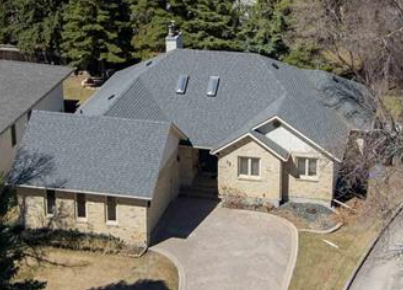
20 Marygrove Crescent

Whyte Ridge, Winnipeg

75.1

Good

Overall 75.1

Smaller than most nearby homes

1,220 sqft (bottom 10%)

Built in 1990 (4 yrs older than avg)

Located in a high-income area

with median household income of ~118k

Transit 94.0

1-min walk to transit with 4 nearby routes

Within 500m: 6 dining spots, 2 healthcare facilitys, 1 shop, and 1 park nearby

Living Area

Below average

27% smaller than neighborhood avg.

Year Built

Below average

4 yrs older than neighborhood avg.

Mother tongue

English · 51%Punjabi · 10%

Past 10 years Whyte Ridge sales snapshot (~80% of all data)

Sold Count

752

Median price

536.3k

$/sqft

$352/sqft

Avg build year

1994

Need help understanding this property?

Buying a home is more than a transaction. Our Winnipeg real estate agents provide market insights, pricing analysis, and neighbourhood expertise to help you decide with confidence.

Usually replies in a few minutes

Property score

75.1 is composed by the two sections below.

Property Score

65.3Good
Living Area1,220 sqft66Good
Year Built199078Good
Lot Size4,827 sqft60Fair
Neighbourhood Sales Activity23Low

Community Score

89.8Excellent
Household Income90Excellent
Education Level91Excellent
Housing Stress83Excellent
Core Housing Need100Excellent
Employment Health83Excellent

Neighbourhood Sales

Whyte Ridge

How to read: Share of sales in each ~$50k price band for “whyte ridge” (Detached houses (non-condo), 2024). The tallest band is the mainstream budget range; multi-year view shows how that band shifts over time.

Market Conditions · WinnipegSeller's Market
Buyer'sBalancedSeller's

Sales-to-New-Listings

64.6%

1,196

sold

1,852

new listings

Manitoba Real Estate Association March public data on New Listings and Properties Sold across Manitoba

Sold Above Asking

65%

Majority sold above asking

68 of 104 sold above asking · Manually compiled from MLS Winnipeg sold listings, May 4 – May 10, 2026

With a Sales-to-New-Listings ratio of 64.6% and 65% of homes selling above asking price, demand is clearly outpacing supply. Buyers are competing, which is putting upward pressure on prices.

Area census snapshot

Dissemination area (DA) — Statistics Canada 2021 Census · Area: #46111217

Community deep dive

$118K

Median household income

$120K

Average household income

3%

Low income (LIM-AT)

0.2

Income inequality (Gini)

2.6

P90 / P10 ratio

9%

Single-person households

33%

Families with children

Population, labour & age

Population (2021)489
Labour force participation rate75%
Median age44.8
Avg household size3.0
Unemployment rate9%
Population density1956 / km²

Households & income

Low income (LIM-AT, % pop.)3%
Single-person households9%
Couple families with children33%
Median household income (2020)$118K

Housing

Renter households9%
Condominium dwellings0%
Median dwelling value (owners)$448K

Diversity, education & language

Immigrants (share of pop.)37%
Visible minority46%
Bachelor's or higher (25–64)50%
Mother tongue (1st)English · 51%
Mother tongue (2nd)Punjabi · 10%

Figures are for the census dissemination area containing this listing location; sources and margins may apply per Statistics Canada.

Rankings

Living Area

around average
1,220 sqft
0255075100
Same streetBottom 24%Same areaBottom 10%CitywideTop 48%
Same street · Marygrove Crescent
#79 / 104
Bottom 24% · Avg 1,312 sqft
Same area · Whyte Ridge
#2,143 / 2,382
Bottom 10% · Avg 1,666 sqft
Citywide · Winnipeg
#93,750 / 194,458
Top 48% · Avg 1,342 sqft

Tax-Assessed Value

above average
488k
0255075100
Same streetTop 23%Same areaBottom 31%CitywideTop 22%
Same street · Marygrove Crescent
#24 / 104
Top 23% · Avg 476.3k
Same area · Whyte Ridge
#1,649 / 2,382
Bottom 31% · Avg 529.6k
Citywide · Winnipeg
#42,318 / 194,458
Top 22% · Avg 390.1k

Year Built

above average
1990
0255075100
Same streetBottom 34%Same areaBottom 36%CitywideTop 22%

Lot Size

above average
4,827 sqft
0255075100
Same streetTop 20%Same areaBottom 24%CitywideBottom 40%

To see this property on a map next to nearby houses—and compare year built, living area, assessed value, and lot size in detail—open the neighbourhood analysis page.

Transit & Walkability

Nearby stops, routes & transit score

Nearby Amenities

Dining, education, healthcare, shopping & more

20 Marygrove Crescent — 16 amenities found within 500 m, across 7 categories, including 6 dining (nearest 405 m), 2 healthcare (nearest 392 m), 1 shopping (nearest 496 m).

Search radius
🍽️Dining6
🏥Healthcare2
🛒Shopping1
🌳Parks1
🏦Finance1
Fuel Stations3
Worship2

Crime & Safety

Whyte Ridge · WPS public data · 2026

Annual incidents

4

2026

vs. city avg

-86%

relative to avg

Year-over-year

-95%

vs. prior year

Primary type

Violent

75%

Sales History

Sold 9/2021CA$400k–450k
Sold price

Same street

Bottom 35%

Same area

Bottom 18%

City-wide

Top 32%

Related homes

Highlights & common questions: 20 Marygrove Crescent, Winnipeg

20 Marygrove Crescent – Property Summary

Key Characteristics & Buyer Profile

This is a 1,220 sqft home built in 1990 on a 4,827 sqft lot in Whyte Ridge, Winnipeg. What stands out is the mismatch between value and size: its assessed value ($488k) ranks well above average on the street (top 23%) and citywide (top 22%), while its living area is below average both locally and in the neighbourhood. In plain terms, you’re paying for a lot and location more than square footage—the land itself ranks in the top 20% on Marygrove Crescent, and the house is newer than most homes across Winnipeg (top 22% citywide for year built). The neighbourhood average for living area is notably larger (1,666 sqft), so this home is on the smaller side for Whyte Ridge but holds its value.

The appeal here is efficiency and relative affordability within a higher-value area. A buyer gets a solidly built, late-20th-century home on a generous lot without paying for excess space they may not need. It suits someone who prioritizes land, a good address, and a newer build over open floor plans or large rooms—empty nesters, couples, or small families who want Whyte Ridge without the typical price tag for a 1,600 sqft house. It’s also a practical fit for buyers who see the lot as a long-term asset (e.g., future renovation or extension).


Five Possible FAQs

1. The living area is below average for Whyte Ridge—does that hurt resale value?
Not necessarily. The assessed value is above average on the street and citywide, which suggests the market already prices in the smaller footprint. In a neighbourhood with many larger homes, a smaller, well-maintained house can appeal to buyers who want the area without the premium for extra space. Resale depends on how the home compares to others listed at the time, not just averages.

2. Is the land area actually usable, or does it include odd shapes?
At 4,827 sqft, the lot is above average for the street but below the Whyte Ridge average (6,175 sqft). It’s a fairly standard suburban size for the era—big enough for a decent yard and likely a single garage and driveway. Unless the property detail shows irregular boundaries, you can expect a typical rectangular lot that offers outdoor space without the maintenance of a larger property.

3. How does the assessed value compare to recent sale prices in Whyte Ridge?
Assessed value ($488k) is a starting point, not a sale price. On this street, it’s above the average assessment ($476.3k), but neighbourhood average is higher ($529.6k). Current market conditions—supply, demand, and condition of this specific home—will determine final price. Always look at recent sales on Marygrove Crescent for a realistic range.

4. Why is the home ranked “top 22% citywide” for year built but only average on its street?
The citywide average year built for comparable homes is 1966, so a 1990 home is significantly newer than much of Winnipeg’s housing stock. On Marygrove Crescent and in Whyte Ridge, most homes are from the late 1980s to early 1990s, making this house right in the middle of its immediate neighbours. It’s new compared to the city, but not new compared to the street.

5. What does the red/blue/amber/gray color coding on the rankings mean?
It signals performance tiers: usually red for top tier, blue for above average, amber for around average, and gray for below average. In this property’s data, the land area and assessed value show as stronger tiers locally, while living area shows weaker—helping you quickly see where the home stands out and where it falls short relative to peers.

Radar charts, rankings, and side-by-side layouts work best on a larger screen. Open this page on a desktop browser for the full experience.