74.8
Good
Property score
74.8
Good
Overall 74.8
Smaller but newer than most nearby homes
1,213 sqft (bottom 6%)
Built in 2022 (1 yr newer than avg)
Located in a high-income area
with median household income of ~105k
Transit 62.0
2-min walk to transit with 1 nearby route

Sold for $250,000 over asking
Winnipeg Real Estate Sales Summary & Market Analysis May 11–17, 2026
Living Area
Below average
24% smaller than neighborhood avg.
Year Built
Above average
1 yrs newer than neighborhood avg.
Mother tongue
English · 45%Tagalog · 18%
Past 10 years West Kildonan Industrial sales snapshot (~80% of all data)
626
422.5k
$297/sqft
2021
Need help understanding this property?
Buying a home is more than a transaction. Our Winnipeg real estate agents provide market insights, pricing analysis, and neighbourhood expertise to help you decide with confidence.
Usually replies in a few minutes
Get the full property report
- Exact sold prices
- Detailed market analysis
- PDF report download
- Neighbourhood insights
- Recent sold count in the area
Free · No credit card required
Property score
74.8 is composed by the two sections below.
Property Score
Community Score
Neighbourhood Sales
West Kildonan Industrial
How to read: Share of sales in each ~$50k price band for “west kildonan industrial” (Detached houses (non-condo), 2024). The tallest band is the mainstream budget range; multi-year view shows how that band shifts over time.
Sales-to-New-Listings
1,196
sold
1,852
new listings
Manitoba Real Estate Association March public data on New Listings and Properties Sold across Manitoba
Sold Above Asking
Majority sold above asking
68 of 104 sold above asking · Manually compiled from MLS Winnipeg sold listings, May 4 – May 10, 2026
With a Sales-to-New-Listings ratio of 64.6% and 65% of homes selling above asking price, demand is clearly outpacing supply. Buyers are competing, which is putting upward pressure on prices.
Area census snapshot
Dissemination area (DA) — Statistics Canada 2021 Census · Area: #46110002
Community deep dive
$105K
Median household income
$112K
Average household income
6%
Low income (LIM-AT)
0.2
Income inequality (Gini)
2.7
P90 / P10 ratio
13%
Single-person households
40%
Families with children
Population, labour & age
Households & income
Housing
Diversity, education & language
Figures are for the census dissemination area containing this listing location; sources and margins may apply per Statistics Canada.
Rankings
Tax-Assessed Value
around averageYear Built
EliteLot Size
around averageRank by land area, larger = better rank
Rank by year, newer = better rank
Rank by living area, larger = better rank
Rank by assessed value, higher = better rank
Bar: fill length ≈ share of peers you outperform. Fill color reflects tier (red / blue / amber / gray). “Avg” is a rough median benchmark for comparable homes in that scope.
To see this property on a map next to nearby houses—and compare year built, living area, assessed value, and lot size in detail—open the neighbourhood analysis page.
Transit & Walkability
Nearby stops, routes & transit score
Nearby Amenities
Dining, education, healthcare, shopping & more
Crime & Safety
West Kildonan Industrial · WPS public data · 2026
Annual incidents
5
2026
vs. city avg
-83%
relative to avg
Year-over-year
▼ -93%
vs. prior year
Primary type
Violent
60%
Sales History
Same street
Same area
City-wide
| Metric | Same street | Same area | City-wide |
|---|---|---|---|
Sold price | Bottom 37% | Bottom 31% | Top 38% |
19 Sagitta Street · Sold transaction data notes
Data Source
Data Coverage
Data Precision
Is Current Data Suitable for You
How to Get More Accurate Data
Privacy & Commitment
Request exact sold prices and history by email
Related homes
Nearby interested homes
Address · Year Built · Living Area
Nearby properties
Address · Distance
Similar assessed value
Address · Tax-Assessed Value
Highlights & common questions: 19 Sagitta Street, Winnipeg
Key Characteristics & Buyer Profile
This is a 1,213 sqft home built in 2022 on a 2,550 sqft lot, located at 19 Sagitta Street in Winnipeg’s West Kildonan Industrial area. Its strongest asset is its age: the building places in the top 1% citywide for newness, meaning it likely requires minimal immediate maintenance and meets modern building standards. This is a practical advantage, not just a cosmetic one. The living area is slightly below average for its immediate neighbourhood (which skews toward larger homes) but sits right at the city’s median. The assessed value is also below the local and city averages—reflecting the smaller footprint and lot size, not a lack of quality.
The appeal here lies in getting a very new house at a more accessible price point than much of the surrounding stock. Buyers won’t be paying a premium for extra square footage or a large yard they may not need. It suits first-time homeowners who want a low-maintenance, move-in-ready property without the compromises of an older starter home. It could also work for downsizers leaving a larger family house who still want a contemporary feel. The relatively compact lot means less time on yard work, which is an underrated selling point for people with busy schedules. This isn’t a home for someone seeking character or a sprawling property—it’s for someone who values efficiency and a recent build above all else.
Five Possible FAQs
1. The living area ranking says “top 94%” for the community. Is the house small?
Not in a general sense. Within West Kildonan Industrial, the average home is about 1,591 sqft, so by local standards this is on the smaller side. But compared to the citywide average of 1,342 sqft, it’s typical. The house is compact relative to its immediate neighbours, not undersized for Winnipeg as a whole.
2. Why is the assessed value so much lower than the neighbourhood average?
The main factors are the smaller living area and the smaller lot. The neighbourhood average assessment of $443,000 reflects properties that are both larger and sit on bigger parcels of land. Your tax bill is based on this lower assessed value, which keeps ongoing costs down.
3. The land area is well below the city average. Will that affect resale?
It can, depending on the buyer. In a market where large lots are prized, this property has less land to offer. However, many buyers now prefer a smaller lot because it means lower maintenance and, often, a lower purchase price. It’s less about being a disadvantage and more about attracting a specific type of buyer—someone who values a new house over acreage.
4. The house was built in 2022. What common issues should I look for?
New builds generally have few major problems, but it’s worth checking for settlement cracks in drywall or foundation edges, which can happen in the first few years as the house settles. Also confirm that all builder warranties are still active and transferable—some may be expiring soon or require registration.
5. How does this property compare to other new builds in the same price range?
It competes well on age, as most similarly priced homes in the city are much older (citywide average build year is 1966). You’re essentially trading older construction and possibly a larger lot for a brand-new structure. The trade-off is usually favourable for someone who doesn’t want to budget for immediate roof, furnace, or window replacements.
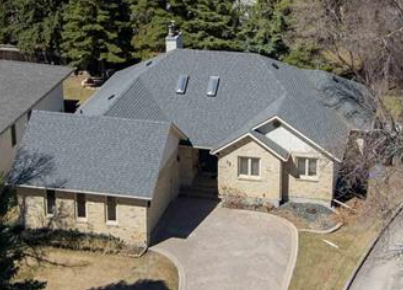
Map & Street View
Radar charts, rankings, and side-by-side layouts work best on a larger screen. Open this page on a desktop browser for the full experience.