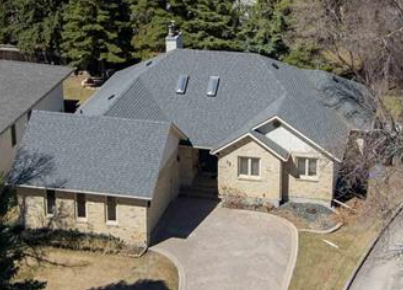
507 Burrows Avenue

William Whyte, Winnipeg

45.1

Below average

Overall 45.1

Smaller but newer than most nearby homes

812 sqft (bottom 19%)

Built in 1986 (59 yrs newer than avg)

Located in a average-income area

with median household income of ~56.8k

Transit 80.0

4-min walk to transit with 3 nearby routes

Within 500m: 2 dining spots, 2 schools, 1 healthcare facility, and 3 shops nearby

Living Area

Below average

30% smaller than neighborhood avg.

Year Built

Above average

59 yrs newer than neighborhood avg.

Mother tongue

English · 76%Tagalog · 11%

Past 10 years William Whyte sales snapshot (~80% of all data)

Sold Count

703

Median price

117k

$/sqft

$87/sqft

Avg build year

1927

Need help understanding this property?

Buying a home is more than a transaction. Our Winnipeg real estate agents provide market insights, pricing analysis, and neighbourhood expertise to help you decide with confidence.

Usually replies in a few minutes

Property score

45.1 is composed by the two sections below.

Property Score

43.4Low
Living Area812 sqft32Low
Year Built198678Good
Lot Size3,268 sqft38Low
Neighbourhood Sales Activity59Fair

Community Score

47.6Low
Household Income60Fair
Education Level34Low
Housing Stress42Low
Core Housing Need38Low
Employment Health28Low

Neighbourhood Sales

William Whyte

How to read: Share of sales in each ~$50k price band for “william whyte” (Detached houses (non-condo), 2024). The tallest band is the mainstream budget range; multi-year view shows how that band shifts over time.

Market Conditions · WinnipegSeller's Market
Buyer'sBalancedSeller's

Sales-to-New-Listings

64.6%

1,196

sold

1,852

new listings

Manitoba Real Estate Association March public data on New Listings and Properties Sold across Manitoba

Sold Above Asking

65%

Majority sold above asking

68 of 104 sold above asking · Manually compiled from MLS Winnipeg sold listings, May 4 – May 10, 2026

With a Sales-to-New-Listings ratio of 64.6% and 65% of homes selling above asking price, demand is clearly outpacing supply. Buyers are competing, which is putting upward pressure on prices.

Area census snapshot

Dissemination area (DA) — Statistics Canada 2021 Census · Area: #46110060

Community deep dive

$57K

Median household income

$61K

Average household income

26%

Low income (LIM-AT)

0.3

Income inequality (Gini)

3.2

P90 / P10 ratio

21%

Single-person households

21%

Families with children

Population, labour & age

Population (2021)652
Labour force participation rate48%
Median age30.4
Avg household size2.8
Unemployment rate20%
Population density8150 / km²

Households & income

Low income (LIM-AT, % pop.)26%
Single-person households21%
Couple families with children21%
Median household income (2020)$57K

Housing

Renter households64%
Condominium dwellings0%
Median dwelling value (owners)$200K

Diversity, education & language

Immigrants (share of pop.)23%
Visible minority28%
Bachelor's or higher (25–64)15%
Mother tongue (1st)English · 75%
Mother tongue (2nd)Tagalog · 11%

Figures are for the census dissemination area containing this listing location; sources and margins may apply per Statistics Canada.

Rankings

Living Area

below average
812 sqft
0255075100
Same streetBottom 14%Same areaBottom 19%CitywideBottom 10%
Same street · Burrows Avenue
#584 / 682
Bottom 14% · Avg 1,116 sqft
Same area · William Whyte
#1,386 / 1,707
Bottom 19% · Avg 1,158 sqft
Citywide · Winnipeg
#175,428 / 194,458
Bottom 10% · Avg 1,342 sqft

Tax-Assessed Value

around average
168k
0255075100
Same streetBottom 35%Same areaTop 31%CitywideBottom 5%
Same street · Burrows Avenue
#443 / 682
Bottom 35% · Avg 227.3k
Same area · William Whyte
#527 / 1,707
Top 31% · Avg 149.1k
Citywide · Winnipeg
#185,503 / 194,458
Bottom 5% · Avg 390.1k

Year Built

above average
1986
0255075100
Same streetTop 10%Same areaTop 13%CitywideTop 27%

Lot Size

around average
3,268 sqft
0255075100
Same streetTop 40%Same areaTop 42%CitywideBottom 16%

To see this property on a map next to nearby houses—and compare year built, living area, assessed value, and lot size in detail—open the neighbourhood analysis page.

Transit & Walkability

Nearby stops, routes & transit score

Nearby Amenities

Dining, education, healthcare, shopping & more

507 Burrows Avenue — 17 amenities found within 500 m, across 7 categories, including 2 dining (nearest 441 m), 2 education (nearest 154 m), 1 healthcare (nearest 109 m).

Search radius
🍽️Dining2
🏫Education2
🏥Healthcare1
🛒Shopping3
🌳Parks4
Worship4
🏛️Government1

Crime & Safety

William Whyte · WPS public data · 2026

Annual incidents

160

2026

vs. city avg

+442%

relative to avg

Year-over-year

-92%

vs. prior year

Primary type

Property

50%

Sales History

507 Burrows Avenue: We are not showing a transaction history based solely on public data; that does not mean no sale ever occurred. You can still request details by email in the “Data notes” section below—we will look it up manually and reply with the most accurate information available.

Related homes

Highlights & common questions: 507 Burrows Avenue, Winnipeg

Here is a clean summary of the property at 507 Burrows Avenue, written for direct display on a webpage.


Key Characteristics & Buyer Profile

Size and Space
The home has a living area of 812 square feet and sits on a 3,268 square foot lot. Compared to other homes in the city, the building is on the smaller side (bottom 10% citywide for living area), but the lot is fairly standard for the neighborhood. The house is compact, which typically means lower maintenance and utility costs.

Age and Construction
Built in 1986, this is a younger home than most of its neighbors. On Burrows Avenue, it ranks in the top 10% for newer construction, and in the broader William Whyte area, it’s in the top 13%. A 1986 build often means fewer legacy issues (like knob-and-tube wiring or foundation settling) compared to the pre-war homes common in the area.

Value Assessment
The assessed value sits at $168,000. This is below the street average ($227k) but actually above the neighborhood average ($149k). This suggests the property is priced realistically relative to its smaller living area, but it’s holding value better than many older homes in the immediate vicinity.

Where the Appeal Lies
The main draw is getting a newer, simpler structure in an older neighborhood without paying a premium for square footage you don’t need. It’s a straightforward, no-fuss property. For buyers who want a solid, modern build year without the higher price tag of a fully renovated Victorian, this fits that gap.

Who It Suits

  • First-time buyers looking for a manageable, lower-cost entry into the market.
  • Investors seeking a newer rental with less deferred maintenance.
  • Downsizers who don’t want a large lot or an old house with character quirks.
  • Anyone specifically looking in William Whyte who wants to avoid the typical early-1900s housing stock.

Five Frequently Asked Questions

1. Is the 812 sqft living area a major disadvantage compared to other homes?
It depends on your reference point. On Burrows Avenue, 812 sqft is well below the street average (1,116 sqft). Citywide, it sits in the bottom 10%. However, in the William Whyte neighborhood, the gap is smaller. If you compare it to the average home in the area (1,158 sqft), you’re losing roughly 30% of the floor space—but you also gain a more efficient layout and lower heating costs.

2. Why is the assessed value higher than the neighborhood average but lower than the street average?
The street average ($227k) is pulled up by larger, likely older homes with more living space. Your assessment reflects the smaller square footage. On the neighborhood level ($149k), the average is dragged down by a lot of very old, possibly less maintained properties. Your home’s newer build stats lift it above that lower baseline.

3. Is the lot size 3,268 sqft considered small?
Locally, it’s around average. On your street, the average lot is 3,497 sqft (you’re slightly under). In the neighborhood, it’s 3,277 sqft (you’re right in line). Citywide, lots in Winnipeg average 6,570 sqft, which is much larger. So within William Whyte, this lot is typical, but it’s modest compared to suburban properties.

4. How does the 1986 build hold up compared to the neighborhood’s older homes?
Very well in terms of structural standards. Most homes nearby date from the 1920s-1940s. A 1986 build means modern electrical, insulation, and plumbing codes. You trade off historic character and tall ceilings for better energy efficiency and lower immediate repair risk. It’s a “move-in ready” age, not a “project” age.

5. Why does the map analysis matter for this property?
Because the numbers only tell part of the story. The neighborhood analysis tool lets you see the exact condition and curb appeal of the neighboring properties. For a house like this—newer than most around it—seeing the street context is key. A newer house on a well-kept block is a better buy than a newer house on a neglected block, even if the stats look the same.

Radar charts, rankings, and side-by-side layouts work best on a larger screen. Open this page on a desktop browser for the full experience.