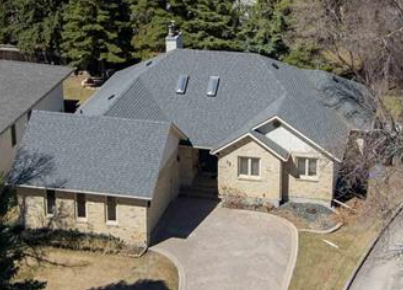
121 Niagara Street

Wellington Crescent, Winnipeg

79.2

Good

Overall 79.2

Older than most nearby homes

1,979 sqft (bottom 46%)

Built in 1916 (24 yrs older than avg)

Located in a high-income area

with median household income of ~150k

Transit 76.0

1-min walk to transit with 1 nearby route

Within 500m: 3 dining spots, 1 school, and 1 fuel station nearby

Living Area

Near average

16% smaller than neighborhood avg.

Year Built

Below average

24 yrs older than neighborhood avg.

Mother tongue

English · 88%Chinese · 2%

Past 10 years Wellington Crescent sales snapshot (~80% of all data)

Sold Count

208

Median price

707.5k

$/sqft

$349/sqft

Avg build year

1940

Need help understanding this property?

Buying a home is more than a transaction. Our Winnipeg real estate agents provide market insights, pricing analysis, and neighbourhood expertise to help you decide with confidence.

Usually replies in a few minutes

Property score

79.2 is composed by the two sections below.

Property Score

69.0Good
Living Area1,979 sqft92Excellent
Year Built191616Low
Lot Size4,300 sqft53Fair
Neighbourhood Sales Activity53Fair

Community Score

94.6Excellent
Household Income94Excellent
Education Level100Excellent
Housing Stress100Excellent
Core Housing Need100Excellent
Employment Health76Good

Neighbourhood Sales

Wellington Crescent

How to read: Share of sales in each ~$50k price band for “wellington crescent” (Detached houses (non-condo), 2024). The tallest band is the mainstream budget range; multi-year view shows how that band shifts over time.

Market Conditions · WinnipegSeller's Market
Buyer'sBalancedSeller's

Sales-to-New-Listings

64.6%

1,196

sold

1,852

new listings

Manitoba Real Estate Association March public data on New Listings and Properties Sold across Manitoba

Sold Above Asking

65%

Majority sold above asking

68 of 104 sold above asking · Manually compiled from MLS Winnipeg sold listings, May 4 – May 10, 2026

With a Sales-to-New-Listings ratio of 64.6% and 65% of homes selling above asking price, demand is clearly outpacing supply. Buyers are competing, which is putting upward pressure on prices.

Area census snapshot

Dissemination area (DA) — Statistics Canada 2021 Census · Area: #46110379

Community deep dive

$150K

Median household income

$188K

Average household income

2%

Low income (LIM-AT)

0.3

Income inequality (Gini)

4.0

P90 / P10 ratio

14%

Single-person households

48%

Families with children

Population, labour & age

Population (2021)475
Labour force participation rate70%
Median age47.2
Avg household size2.8
Unemployment rate9%
Population density3392 / km²

Households & income

Low income (LIM-AT, % pop.)2%
Single-person households14%
Couple families with children48%
Median household income (2020)$150K

Housing

Renter households12%
Condominium dwellings0%
Median dwelling value (owners)$552K

Diversity, education & language

Immigrants (share of pop.)5%
Visible minority0%
Bachelor's or higher (25–64)70%
Mother tongue (1st)English · 88%
Mother tongue (2nd)Chinese · 2%

Figures are for the census dissemination area containing this listing location; sources and margins may apply per Statistics Canada.

Rankings

Living Area

above average
1,979 sqft
0255075100
Same streetTop 12%Same areaBottom 46%CitywideTop 11%
Same street · Niagara Street
#41 / 343
Top 12% · Avg 1,491 sqft
Same area · Wellington Crescent
#294 / 548
Bottom 46% · Avg 2,343 sqft
Citywide · Winnipeg
#22,049 / 194,458
Top 11% · Avg 1,342 sqft

Tax-Assessed Value

above average
533k
0255075100
Same streetTop 19%Same areaBottom 39%CitywideTop 15%
Same street · Niagara Street
#66 / 343
Top 19% · Avg 476.8k
Same area · Wellington Crescent
#336 / 548
Bottom 39% · Avg 805.6k
Citywide · Winnipeg
#28,966 / 194,458
Top 15% · Avg 390.1k

Year Built

below average
1916
0255075100
Same streetBottom 3%Same areaBottom 8%CitywideBottom 11%

Lot Size

around average
4,300 sqft
0255075100
Same streetBottom 12%Same areaBottom 24%CitywideBottom 31%

To see this property on a map next to nearby houses—and compare year built, living area, assessed value, and lot size in detail—open the neighbourhood analysis page.

Transit & Walkability

Nearby stops, routes & transit score

Nearby Amenities

Dining, education, healthcare, shopping & more

121 Niagara Street — 5 amenities found within 500 m, across 3 categories, including 3 dining (nearest 99 m), 1 education (nearest 436 m).

Search radius
🍽️Dining3
🏫Education1
Fuel Stations1

Crime & Safety

Wellington Crescent · WPS public data · 2026

Annual incidents

13

2026

vs. city avg

-56%

relative to avg

Year-over-year

-93%

vs. prior year

Primary type

Property

77%

Sales History

Sold 10/2020CA$400k–450k
Sold price

Same street

Bottom 43%

Same area

Bottom 24%

City-wide

Top 29%

Related homes

Highlights & common questions: 121 Niagara Street, Winnipeg

121 Niagara Street – Property Summary

Key Characteristics & Buyer Profile

This 1916 home on Niagara Street offers 1,979 sq ft of living space, which is notably larger than both the street average (1,491 sq ft) and the citywide average (1,342 sq ft), placing it in the top 12% of homes citywide for size. However, its lot is smaller than typical for the neighbourhood—4,300 sq ft versus a community average of 9,488 sq ft—and the house is older than most in the area, built nearly 25 years before the street average.

The assessed value of $533,000 sits above the street and city averages but well below the Wellington Crescent community average of $806,000, reflecting the trade-off between generous interior space and a more modest land footprint in an established, higher-value area.

Where the appeal lies: This property offers substantial interior square footage at a price point that undercuts much of the surrounding neighbourhood. The home’s age (1916) suggests character details and solid construction typical of that era, though buyers should anticipate maintenance needs consistent with an older house. The location on Niagara Street places it within the broader Wellington Crescent area, which is known for larger estates—meaning this home offers a more accessible entry point into that desirable district.

Who it suits: Buyers who prioritize interior space over land size, are comfortable with an older home, and want to be in the Wellington Crescent area without paying the premium for a large lot. It may also appeal to those who see potential to add value through renovation, given the discrepancy between interior size and assessed value relative to the community.


Frequently Asked Questions

1. How does the property’s age affect its value and desirability?
The home was built in 1916, making it older than 97% of houses on the same street and 89% citywide. This means the original construction likely includes features like solid framing, higher ceilings, and period detailing that are hard to find in newer builds. At the same time, systems such as electrical, plumbing, and insulation may need updating, and ongoing maintenance is a realistic expectation rather than a surprise.

2. Why is the assessed value so much lower than the Wellington Crescent average?
The primary reason is lot size. The community average land area is more than double this property’s 4,300 sq ft, and land value is a major component of assessed value in high-demand neighbourhoods. The home’s interior square footage is strong, but the smaller lot keeps the overall assessment below the surrounding average.

3. Is the location considered a desirable area?
Niagara Street falls within the Wellington Crescent area, one of Winnipeg’s more established and sought-after districts. While this specific street may not have the same prestige as the crescent itself, it offers proximity to the amenities, schools, and character of that neighbourhood at a more accessible price point.

4. How does the square footage compare to typical homes in the city?
At 1,979 sq ft, this home is larger than roughly 89% of properties citywide. It’s also significantly above the street average, which suggests it stands out among nearby homes in terms of interior space. Within the broader Wellington Crescent community, however, it’s slightly below average—indicating that larger homes are common in the area.

5. What should a buyer look out for with a 1916 home?
Beyond the usual pre-purchase inspection, it’s worth paying close attention to the foundation, roof structure, and original windows, as these are common areas of concern in early 20th-century houses. Lead paint and outdated wiring may also be present. The upside is that well-maintained homes of this era often have mature landscaping, solid masonry, and character that newer construction lacks.

Radar charts, rankings, and side-by-side layouts work best on a larger screen. Open this page on a desktop browser for the full experience.