48.7
Below average
Property score
48.7
Below average
Overall 48.7
Smaller but newer than most nearby homes
877 sqft (bottom 25%)
Built in 1978 (51 yrs newer than avg)
Located in a average-income area
with median household income of ~62.4k
Transit 82.0
1-min walk to transit with 2 nearby routes
Within 500m: 1 dining spot, 2 schools, 1 healthcare facility, and 4 shops nearby

Sold for $250,000 over asking
Winnipeg Real Estate Sales Summary & Market Analysis May 11–17, 2026
Living Area
Below average
24% smaller than neighborhood avg.
Year Built
Above average
51 yrs newer than neighborhood avg.
Mother tongue
English · 63%Tagalog · 18%
Past 10 years William Whyte sales snapshot (~80% of all data)
703
117k
$87/sqft
1927
Need help understanding this property?
Buying a home is more than a transaction. Our Winnipeg real estate agents provide market insights, pricing analysis, and neighbourhood expertise to help you decide with confidence.
Usually replies in a few minutes
Get the full property report
- Exact sold prices
- Detailed market analysis
- PDF report download
- Neighbourhood insights
- Recent sold count in the area
Free · No credit card required
Property score
48.7 is composed by the two sections below.
Property Score
Community Score
Neighbourhood Sales
William Whyte
How to read: Share of sales in each ~$50k price band for “william whyte” (Detached houses (non-condo), 2024). The tallest band is the mainstream budget range; multi-year view shows how that band shifts over time.
Sales-to-New-Listings
1,196
sold
1,852
new listings
Manitoba Real Estate Association March public data on New Listings and Properties Sold across Manitoba
Sold Above Asking
Majority sold above asking
68 of 104 sold above asking · Manually compiled from MLS Winnipeg sold listings, May 4 – May 10, 2026
With a Sales-to-New-Listings ratio of 64.6% and 65% of homes selling above asking price, demand is clearly outpacing supply. Buyers are competing, which is putting upward pressure on prices.
Area census snapshot
Dissemination area (DA) — Statistics Canada 2021 Census · Area: #46110059
Community deep dive
$62K
Median household income
$69K
Average household income
22%
Low income (LIM-AT)
0.2
Income inequality (Gini)
3.2
P90 / P10 ratio
29%
Single-person households
21%
Families with children
Population, labour & age
Households & income
Housing
Diversity, education & language
Figures are for the census dissemination area containing this listing location; sources and margins may apply per Statistics Canada.
Rankings
Tax-Assessed Value
above averageYear Built
above averageLot Size
around averageRank by land area, larger = better rank
Rank by year, newer = better rank
Rank by living area, larger = better rank
Rank by assessed value, higher = better rank
Bar: fill length ≈ share of peers you outperform. Fill color reflects tier (red / blue / amber / gray). “Avg” is a rough median benchmark for comparable homes in that scope.
To see this property on a map next to nearby houses—and compare year built, living area, assessed value, and lot size in detail—open the neighbourhood analysis page.
Transit & Walkability
Nearby stops, routes & transit score
Nearby Amenities
Dining, education, healthcare, shopping & more
581 Burrows Avenue — 16 amenities found within 500 m, across 8 categories, including 1 dining (nearest 360 m), 2 education (nearest 154 m), 1 healthcare (nearest 347 m).
Crime & Safety
William Whyte · WPS public data · 2026
Annual incidents
160
2026
vs. city avg
+442%
relative to avg
Year-over-year
▼ -92%
vs. prior year
Primary type
Property
50%
Waste Collection Schedule
Local garbage, recycling, and yard waste pickup schedule for 581 Burrows Avenue.
Garbage
thursday
Recycling
thursday
Yard Waste
thursday a
Sales History
Same street
Same area
City-wide
| Metric | Same street | Same area | City-wide |
|---|---|---|---|
Sold price | Bottom 29% | Top 43% | Bottom 4% |
581 Burrows Avenue · Sold transaction data notes
Data Source
Data Coverage
Data Precision
Is Current Data Suitable for You
How to Get More Accurate Data
Privacy & Commitment
Request exact sold prices and history by email
Related homes
Nearby interested homes
Address · Year Built · Living Area
Nearby properties
Address · Distance
Similar assessed value
Address · Tax-Assessed Value
Highlights & common questions: 581 Burrows Avenue, Winnipeg
581 Burrows Avenue – Property Summary
Key Characteristics & Buyer Profile
This is a 1978-built home with 877 square feet of living space on a 3,268 sqft lot. What stands out most is the assessed value relative to its age and location. The property ranks in the top 12% for assessed value within the William Whyte neighbourhood, meaning it carries a significantly higher value than most nearby homes (neighbourhood average assessed value is $149.1k, compared to this property’s $214k). At the same time, it ranks in the top 18% for being newer than most homes on Burrows Avenue, where the average build year is 1944. So you’re getting a relatively newer home in an older-stock area, with an assessed value that reflects above-average condition or upgrades compared to the immediate neighbours. Nationally and city-wide, its value and size are below average, which is typical for an older inner-city neighbourhood.
The living area (877 sqft) is below the street, neighbourhood, and city averages—so space is modest. The land area (3,268 sqft) is around average for the neighbourhood but well below the citywide norm of 6,570 sqft, common for older urban lots. The appeal here is not square footage or land size, but value density—it’s a compact, well-valued property in a transitioning area where newer builds are rare. It would suit a first-time buyer looking for affordable homeownership rather than maximum space, an investor who sees upside in a below-city-average valuation with neighbourhood positioning, or someone who values a newer build in an established older neighbourhood over a larger house further out.
Five Possible FAQs
1. The living area is below average. Does that make it hard to resell?
It depends on the buyer pool. In William Whyte, many homes are smaller and older, so 877 sqft isn’t unusual for the area. The bigger factor is that the property ranks high for its assessed value locally, which suggests it’s well-maintained or updated. That often matters more to buyers than raw square footage in an older inner-city market. If you’re buying, expect that space-conscious buyers or downsizers would be your eventual resale audience.
2. Why is the assessed value so much higher than the neighbourhood average?
The neighbourhood average ($149.1k) includes many older homes that haven’t been updated. This property is newer (1978 vs. average 1927 in the area), and assessed value reflects condition, upgrades, and relative desirability. Being in the top 12% for value suggests the home is likely in better shape or has features that push it above the local baseline. It doesn’t mean the neighbourhood as a whole is gentrified—just that this specific property stands out.
3. The land is 3,268 sqft. Is that a good size for a project or addition?
It’s around average for the neighbourhood (3,277 sqft) but small by city standards. For a garage, a small extension, or a garden, it’s workable. For a major addition or new build, you’d want to check zoning and setback requirements—but 3,268 sqft is not unusually restrictive for an older Winnipeg lot. It’s more of a “what you see is what you get” lot, not something with room to double your footprint.
4. How does a 1978 build compare to the older homes nearby?
It’s newer than about 82% of homes on the street and 85% in the neighbourhood, where most houses date from the 1920s–1940s. A 1978 build typically has modern electrical, insulation, and foundation standards compared to pre-war homes. That said, it’s not a new build—expect typical 1970s construction materials and possibly fewer period details than the older stock. The trade-off is less maintenance risk (no knob-and-tube wiring, likely asbestos-free) but potentially less charm for some buyers.
5. What’s the “bar” ranking system in the data actually telling me?
It ranks the property against comparable homes at three levels: street, neighbourhood, and city. The fill shows roughly what share of peers you’re above. For example, the assessed value bar at the neighbourhood level is heavily filled (top 12%), meaning the property outperforms 88% of its nearest comparable homes on that metric. The colour tiers (red, blue, amber, gray) group the ranking into very strong, good, average, or weaker performance. It’s a quick way to see where the house stands out and where it’s just middle-of-the-pack—useful for comparing without guessing.
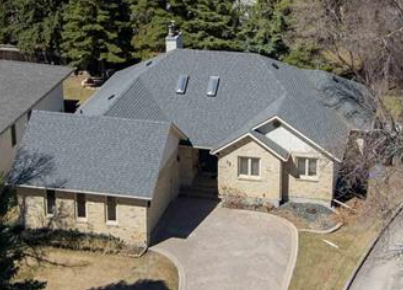
Map & Street View
Radar charts, rankings, and side-by-side layouts work best on a larger screen. Open this page on a desktop browser for the full experience.