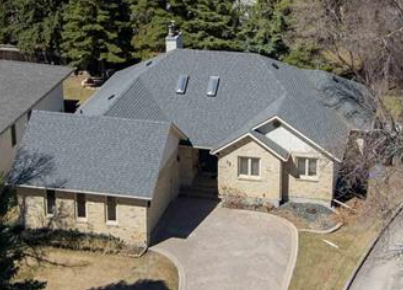
337 Burrows Avenue

William Whyte, Winnipeg

35.0

Below average

Overall 35.0

Smaller and older than most nearby homes

896 sqft (bottom 27%)

Built in 1905 (22 yrs older than avg)

Located in a average-income area

with median household income of ~48.8k

Transit 86.0

3-min walk to transit with 4 nearby routes

Within 500m: 2 dining spots, 2 schools, 2 healthcare facilitys, and 1 shop nearby

Living Area

Below average

23% smaller than neighborhood avg.

Year Built

Below average

22 yrs older than neighborhood avg.

Mother tongue

English · 74%Tagalog · 5%

Past 10 years William Whyte sales snapshot (~80% of all data)

Sold Count

703

Median price

117k

$/sqft

$87/sqft

Avg build year

1927

Need help understanding this property?

Buying a home is more than a transaction. Our Winnipeg real estate agents provide market insights, pricing analysis, and neighbourhood expertise to help you decide with confidence.

Usually replies in a few minutes

Property score

35.0 is composed by the two sections below.

Property Score

29.8Low
Living Area896 sqft32Low
Year Built190510Low
Lot Size3,267 sqft38Low
Neighbourhood Sales Activity59Fair

Community Score

42.7Low
Household Income53Fair
Education Level22Low
Housing Stress52Fair
Core Housing Need38Low
Employment Health28Low

Neighbourhood Sales

William Whyte

How to read: Share of sales in each ~$50k price band for “william whyte” (Detached houses (non-condo), 2024). The tallest band is the mainstream budget range; multi-year view shows how that band shifts over time.

Market Conditions · WinnipegSeller's Market
Buyer'sBalancedSeller's

Sales-to-New-Listings

64.6%

1,196

sold

1,852

new listings

Manitoba Real Estate Association March public data on New Listings and Properties Sold across Manitoba

Sold Above Asking

65%

Majority sold above asking

68 of 104 sold above asking · Manually compiled from MLS Winnipeg sold listings, May 4 – May 10, 2026

With a Sales-to-New-Listings ratio of 64.6% and 65% of homes selling above asking price, demand is clearly outpacing supply. Buyers are competing, which is putting upward pressure on prices.

Area census snapshot

Dissemination area (DA) — Statistics Canada 2021 Census · Area: #46110064

Community deep dive

$49K

Median household income

$58K

Average household income

31%

Low income (LIM-AT)

0.3

Income inequality (Gini)

3.9

P90 / P10 ratio

26%

Single-person households

14%

Families with children

Population, labour & age

Population (2021)578
Labour force participation rate32%
Median age31.8
Avg household size2.8
Unemployment rate8%
Population density6422 / km²

Households & income

Low income (LIM-AT, % pop.)31%
Single-person households26%
Couple families with children14%
Median household income (2020)$49K

Housing

Renter households71%
Condominium dwellings6%
Median dwelling value (owners)$180K

Diversity, education & language

Immigrants (share of pop.)10%
Visible minority22%
Bachelor's or higher (25–64)14%
Mother tongue (1st)English · 73%
Mother tongue (2nd)Tagalog · 5%

Figures are for the census dissemination area containing this listing location; sources and margins may apply per Statistics Canada.

Rankings

Living Area

below average
896 sqft
0255075100
Same streetBottom 25%Same areaBottom 27%CitywideBottom 16%
Same street · Burrows Avenue
#513 / 682
Bottom 25% · Avg 1,116 sqft
Same area · William Whyte
#1,242 / 1,707
Bottom 27% · Avg 1,158 sqft
Citywide · Winnipeg
#163,345 / 194,458
Bottom 16% · Avg 1,342 sqft

Tax-Assessed Value

below average
85k
0255075100
Same streetBottom 2%Same areaBottom 11%CitywideBottom 1%
Same street · Burrows Avenue
#670 / 682
Bottom 2% · Avg 227.3k
Same area · William Whyte
#1,519 / 1,707
Bottom 11% · Avg 149.1k
Citywide · Winnipeg
#194,005 / 194,458
Bottom 1% · Avg 390.1k

Year Built

below average
1905
0255075100
Same streetBottom 12%Same areaBottom 25%CitywideBottom 2%

Lot Size

around average
3,267 sqft
0255075100
Same streetTop 43%Same areaTop 45%CitywideBottom 16%

To see this property on a map next to nearby houses—and compare year built, living area, assessed value, and lot size in detail—open the neighbourhood analysis page.

Transit & Walkability

Nearby stops, routes & transit score

Nearby Amenities

Dining, education, healthcare, shopping & more

337 Burrows Avenue — 12 amenities found within 500 m, across 6 categories, including 2 dining (nearest 418 m), 2 education (nearest 332 m), 2 healthcare (nearest 424 m).

Search radius
🍽️Dining2
🏫Education2
🏥Healthcare2
🛒Shopping1
🌳Parks1
Worship4

Crime & Safety

William Whyte · WPS public data · 2026

Annual incidents

160

2026

vs. city avg

+442%

relative to avg

Year-over-year

-92%

vs. prior year

Primary type

Property

50%

Waste Collection Schedule

Local garbage, recycling, and yard waste pickup schedule for 337 Burrows Avenue.

🗑️

Garbage

thursday

♻️

Recycling

thursday

🍂

Yard Waste

thursday a

Sales History

Sold 4/2021CA$50k–100k
Sold price

Same street

Bottom 4%

Same area

Bottom 10%

City-wide

Bottom 1%

Related homes

Highlights & common questions: 337 Burrows Avenue, Winnipeg

337 Burrows Avenue — Property Summary

Key Characteristics & Suitability

This is a small, older home in Winnipeg's William Whyte neighbourhood, built in 1905 with 896 square feet of living space on a 3,267-square-foot lot. Its assessed value is $85,000.

What stands out: The property is significantly cheaper than almost everything else — ranked in the bottom 2% on its street, bottom 11% in the neighbourhood, and among the very lowest city-wide. That low price reflects the small size and age. The lot itself is fairly average for the area but small by city standards. The house is older than most nearby properties, and the living area is below average at every level of comparison.

What’s less obvious: Being old and small in this context doesn’t necessarily mean poor condition — the data doesn’t speak to renovations or upkeep. A house built in 1905 in a neighbourhood where the average is 1927 means many homes in the area are also pre-war, so you’re not alone in dealing with older construction. The land-to-building ratio is favourable: a 3,267 sqft lot with an 896 sqft house leaves room for expansion, a garage, or a garden, which newer, tighter subdivisions rarely offer. On a street where most homes are assessed at $227,000, this property opens the door to an area that might otherwise be out of reach.

Who it suits: Buyers who are comfortable with a fixer-upper or who have the skills and budget to renovate. First-time buyers looking for the cheapest entry point into a specific neighbourhood. Investors or flippers targeting properties with low acquisition costs and potential for value-add through expansion or modernisation. Someone who values lot space over finished square footage.


Five Frequently Asked Questions

1. How accurate is the assessed value as a measure of what I’d pay?
Assessed value is used for property tax calculations, not market pricing. In a low-assessment bracket like this, the sale price could be higher or lower depending on condition, recent upgrades, and competition. The $85,000 figure tells you this is a low-end property in the city’s eyes, but expect the market to set its own number.

2. Is a house built in 1905 likely to have major structural issues?
Not necessarily, but it’s worth a thorough inspection. Many homes from that era have solid foundations (stone or concrete) and good bones if maintained. Common issues include outdated wiring, lead pipes, knob-and-tube electrical, asbestos in insulation or flooring, and settling in the foundation. The fact that it’s still standing and in the tax rolls after 120 years is a decent sign, but don’t skip the inspection.

3. Could I add square footage to this house?
Possibly. The lot is 3,267 sqft, which is about average for the neighbourhood. That’s enough for a two-storey house or a modest bungalow with an addition. You’d need to check local zoning rules, setback requirements, and whether the house’s existing structure and foundation can support an extension. The land-to-building ratio works in your favour — you’re not on a postage-stamp lot.

4. What’s the William Whyte neighbourhood like?
William Whyte is a central Winnipeg neighbourhood with a mix of older single-family homes and rental properties. It’s generally considered an entry-level area with modest prices. Proximity to downtown, schools, and transit is decent. Like many older central neighbourhoods, it has pockets of higher vacancy and lower household income. It’s worth spending time walking the block at different times of day to get a feel for it.

5. How does this home compare to others in its price range city-wide?
At $85,000 assessed, you’re at the very bottom of the Winnipeg market — ranked in the bottom 1% city-wide. That places it among the most affordable properties in the entire city. Most homes in this bracket are small, old, and in need of work, often in central or older suburban neighbourhoods. You won’t find many alternatives with a land area this large for the price.

Radar charts, rankings, and side-by-side layouts work best on a larger screen. Open this page on a desktop browser for the full experience.