52.3
Fair
Property score
52.3
Fair
Overall 52.3
Compared with neighbourhood average
816 sqft (bottom 36%)
Built in 1931 (4 yrs older than avg)
Located in a high-income area
with median household income of ~103k
Transit 94.0
2-min walk to transit with 4 nearby routes

Sold for $250,000 over asking
Winnipeg Real Estate Sales Summary & Market Analysis May 11–17, 2026
Living Area
Below average
14% smaller than neighborhood avg.
Year Built
Below average
4 yrs older than neighborhood avg.
Mother tongue
English · 66%French · 13%
Past 10 years Mission Industrial sales snapshot (~80% of all data)
7
257k
$245/sqft
1935
Need help understanding this property?
Buying a home is more than a transaction. Our Winnipeg real estate agents provide market insights, pricing analysis, and neighbourhood expertise to help you decide with confidence.
Usually replies in a few minutes
Get the full property report
- Exact sold prices
- Detailed market analysis
- PDF report download
- Neighbourhood insights
- Recent sold count in the area
Free · No credit card required
Property score
52.3 is composed by the two sections below.
Property Score
Community Score
Neighbourhood Sales
Mission Industrial
How to read: Share of sales in each ~$50k price band for “mission industrial” (Detached houses (non-condo), 2024). The tallest band is the mainstream budget range; multi-year view shows how that band shifts over time.
Sales-to-New-Listings
1,196
sold
1,852
new listings
Manitoba Real Estate Association March public data on New Listings and Properties Sold across Manitoba
Sold Above Asking
Majority sold above asking
68 of 104 sold above asking · Manually compiled from MLS Winnipeg sold listings, May 4 – May 10, 2026
With a Sales-to-New-Listings ratio of 64.6% and 65% of homes selling above asking price, demand is clearly outpacing supply. Buyers are competing, which is putting upward pressure on prices.
Area census snapshot
Dissemination area (DA) — Statistics Canada 2021 Census · Area: #46111262
Community deep dive
$103K
Median household income
$107K
Average household income
10%
Low income (LIM-AT)
0.2
Income inequality (Gini)
3.4
P90 / P10 ratio
21%
Single-person households
34%
Families with children
Population, labour & age
Households & income
Housing
Diversity, education & language
Figures are for the census dissemination area containing this listing location; sources and margins may apply per Statistics Canada.
Rankings
Tax-Assessed Value
below averageYear Built
around averageLot Size
above averageRank by land area, larger = better rank
Rank by year, newer = better rank
Rank by living area, larger = better rank
Rank by assessed value, higher = better rank
Bar: fill length ≈ share of peers you outperform. Fill color reflects tier (red / blue / amber / gray). “Avg” is a rough median benchmark for comparable homes in that scope.
To see this property on a map next to nearby houses—and compare year built, living area, assessed value, and lot size in detail—open the neighbourhood analysis page.
Transit & Walkability
Nearby stops, routes & transit score
Nearby Amenities
Dining, education, healthcare, shopping & more
Crime & Safety
Mission Industrial · WPS public data · 2026
Annual incidents
6
2026
vs. city avg
-80%
relative to avg
Year-over-year
▼ -96%
vs. prior year
Primary type
Property
83%
Sales History
Same street
Same area
City-wide
| Metric | Same street | Same area | City-wide |
|---|---|---|---|
Sold price | Bottom 1% | Bottom 14% | Bottom 5% |
923 Dugald Road · Sold transaction data notes
Data Source
Data Coverage
Data Precision
Is Current Data Suitable for You
How to Get More Accurate Data
Privacy & Commitment
Request exact sold prices and history by email
Related homes
Nearby properties
Address · Distance
Similar assessed value
Address · Tax-Assessed Value
Highlights & common questions: 923 Dugald Road, Winnipeg
Property Overview: 923 Dugald Road, Winnipeg
Section 1: Key Characteristics & Appeal
This property at 923 Dugald Road in Winnipeg's Mission Industrial area presents a distinct profile defined by its land value and vintage character. The 816 sqft home, built in 1931, is modest in size and has a very low municipal assessed value ($19,700), placing it well below averages for the street, neighbourhood, and city. Its primary asset is the 8,020 sqft lot, which is notably larger than the typical Winnipeg residential lot.
The appeal lies in its potential as a land play or a foundational project. For the right buyer, the low assessed value suggests a correspondingly low property tax burden, which is a significant long-term consideration. The large lot in an established industrial-area neighbourhood offers rare space for expansion, workshops, storage, or future redevelopment, subject to zoning.
This property would best suit practical, forward-looking buyers such as small business owners seeking a live-work setup, hands-on investors looking for a hold-and-improve project, or individuals who prioritize land over a finished living space. It is less suited for those seeking immediate move-in comfort or conventional suburban comparables.
Section 2: Frequently Asked Questions
1. Why is the assessed value so much lower than the last sold price?
Municipal assessments for tax purposes are based on mass appraisal models and may not reflect current market value, especially for unique or non-standard properties. The low assessment here likely reflects the age and condition of the dwelling, but it results in a lower annual property tax bill.
2. What does the "Mission Industrial" zoning allow?
You must verify the exact zoning with the City of Winnipeg. Industrial zoning can permit a mix of uses, including certain commercial, light industrial, and sometimes residential. This is crucial for understanding what renovations, expansions, or business uses are legally permissible.
3. Is the large lot a benefit for future resale?
It can be, but it's nuanced. The lot size is a standout feature, but its value is heavily dependent on what the zoning allows you to do with it. For a user who needs the space, it's a major asset. For a typical homebuyer in the area, it may be less of a priority.
4. What are the main considerations for renovating a 1931 home?
Expect potential updates to foundational systems like wiring, plumbing, and insulation. While this requires investment, it also allows for custom modernization. The home's smaller size can make such projects more manageable in scope and cost compared to a larger house.
5. How meaningful are the provided "rankings" for Living Area and Value?
They provide context. The rankings show this home is smaller and has a lower assessed value than most in the city. This isn't inherently negative—it defines the property's niche. It highlights that you are purchasing a different type of asset (land/potential) rather than a premium finished living space.
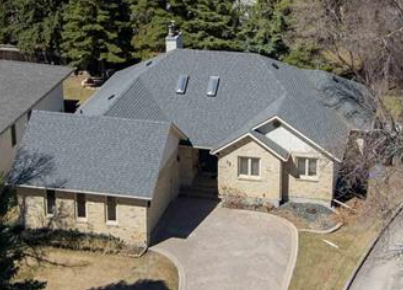
Map & Street View
Radar charts, rankings, and side-by-side layouts work best on a larger screen. Open this page on a desktop browser for the full experience.